

How Much Are
The Small Problems Really Costing You?
A production line doesn't have to suffer a major breakdown to lose efficiency.
Difficult cleaning, poor maintenance access, troublesome transfers and unnecessary product loss can all gradually affect performance.
Some problems are obvious. Others simply become part of the way a line operates.
Here are some practical ways to take a fresh look at your process — and identify the areas that might deserve closer attention.
HYGIENE AND CLEANING
Is your equipment making cleaning harder than it needs to be?
Cleaning is unavoidable in food processing. Unnecessarily difficult cleaning isn't.
The way conveyors and processing equipment are designed can have a significant effect on how quickly and thoroughly they can be cleaned.
Limited access, unnecessary horizontal surfaces, difficult-to-remove components and areas where product or water can accumulate can all make the hygiene team's job harder.
And the consequences aren't limited to hygiene.
Longer cleaning cycles can reduce available production time, increase labour requirements and make it more difficult to achieve consistent cleaning results.

What Should You Look For?
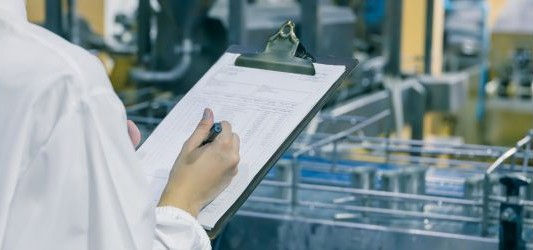
Walk your processing line and consider:
01
Are all product-contact areas easily visible and accessible?
02
Are there areas where food debris or water accumulates?
03
Does cleaning require unnecessary dismantling?
04
Can belts be accessed effectively for cleaning?
05
Are there components preventing hygiene teams from reaching areas beneath the conveyor?
06
Does the equipment drain effectively after washdown?
07
Are particular conveyors regularly responsible for extending the cleaning window?
08
Are surfaces, joints and framework designed so they can be easily inspected for signs of residue, damage or deterioration

Engineering Question - Which three pieces of equipment take your hygiene team longest to clean — and why? Don't just ask engineering. Ask the people who clean the equipment every day. Their answers may highlight design or access problems that aren't obvious during production.

MAINTENANCE AND ACCESS
If it stopped tomorrow, how quickly could you get it running again?
Preventative maintenance is important, but maintainability starts with equipment design.
Motors, bearings, drives, belts, sensors and other serviceable components should be positioned with inspection and maintenance in mind.
If reaching a relatively simple component requires surrounding equipment to be dismantled, a minor fault can become a much larger production problem.
Four Questions Worth Asking
Can We See It?
Can engineers inspect critical components easily enough to identify wear before failure?
Can We Reach It?
Can components be accessed without unnecessary dismantling?
Do We Have It?
Do you know which critical spares should be held on site?
Can We Replace It?
If something fails, does your team have the parts, information and access required to get production moving again?
Engineering Question - Which single piece of equipment would cause the greatest disruption if it stopped tomorrow? What is most likely to fail? → Do you hold the spare? → Who can replace it? → How long would the line be down?

Efficiency isn't always about making equipment run faster.
Sometimes it's about making it easier to clean, maintain and less likely to stop.
PRODUCT HANDLING
Follow the product - not just the conveyor
A conveyor may be mechanically reliable and still be contributing to poor process performance.
Food products behave differently.
Some are fragile. Some are sticky. Others are wet, oily, irregularly shaped, frozen, raw, cooked or packaged.
The conveyor, belt technology and transfer arrangement should reflect those characteristics.
Poorly designed transfers, inappropriate belt selection, excessive drops, mismatched speeds or unsuitable inclines can contribute to product damage and inconsistent flow.

Follow one product through your process
Instead of looking at individual machines, physically follow the product from one process to the next.
REQUIRES
INTERVENTION


DROPS
CHANGES DIRECTION
ACCELERATES OR
DECELLERATES
ACCUMULATES
REQUIRES
INTERVENTION
Is the transfer height greater than necessary?
Does product remain stable and controlled?
Are different conveyor speeds affecting spacing or orientation?
Where do bottlenecks begin?
Where are operators repositioning, clearing or recovering product?
Engineering Question - Where does your product stop behaving
the way you want it to? That point may tell you more about the process than
simply looking at overall line speed.

PRODUCT LOSS
AND WASTE
Don't Just Measure Waste. Find Where It Starts.
Waste is easy to see at the end of a process.
Finding the point where it started can be more difficult.
Not all product loss is caused by the primary processing operation. Product can be damaged, dropped, trapped or spilled as it moves between different stages.
A small amount of loss at an individual transfer may appear insignificant.
But consider that loss across:
Every minute → every shift → every production day → every year.
Suddenly, a small handling problem can become a much bigger issue.

Look Beyond the Waste Bin! - Consider whether product is being lost through Poor conveyor transfers - Excessive drop heights - Inappropriate belt selection - Product sticking or carrying back - Spillage at belt edges - Jams and accumulation - Operator intervention - damage requiring rework or rejection
The important question isn't simply "How much are we wasting?" Its:
Where does the loss begin?
01 - Which piece of equipment takes longest to clean — and why?
02 - Which transfer point requires the most operator intervention?
03 - Where is product most frequently damaged, spilled or lost?
04 - Which equipment failure would cause the longest production stoppage?
05 - If you asked operators, hygiene and engineering what they would change about the line, would they give you the same answer?
5 Questions to take back to your
production floor
01 - Which piece of equipment takes longest to clean — and why?
02 - Which transfer point requires the most operator intervention?
03 - Where is product most frequently damaged, spilled or lost?
04 - Which equipment failure would cause the longest production stoppage?
05 - If you asked operators, hygiene and engineering what they would change about the line, would they give you the same answer?
What did you find?
If the 5 questions shown on the 'line audit checklist' image highlight an issue, don't immediately jump to a solution.
Observe it. Measure it. Talk to the people working with it. Understand why it's happening. Then decide what needs to change.
Remember:
Look at the Line as a Process — Not a Collection of Machines.
A production line can contain individually efficient pieces of equipment and still perform inefficiently as a whole.
The areas between different processes can be just as important as the machinery itself.
Transfers, conveyors, access, controls and interfaces can all influence Throughput • Uptime • Hygiene • Maintenance • Product Quality • Waste • Labour
That's why looking at the complete process matters.


Need another pair of eyes? - Wrightfield engineers work with food processors to understand the process first — considering product characteristics, throughput, hygiene, maintenance, operators, surrounding machinery and future requirements before developing a solution.
Speak to a friendly engineer on +44 (0)1379 872800 or email sales@wrightfield.co.uk