
How food conveyor systems work

If you’ve ever watched a modern food production line, one thing stands out almost immediately: everything is moving.
Ingredients, products, packaging—each step flows into the next with surprising precision. Behind that movement is something simple in principle but incredibly important in practice: the conveyor system.
So, how do food conveyor systems actually work—and why are they such a fundamental part of food processing?
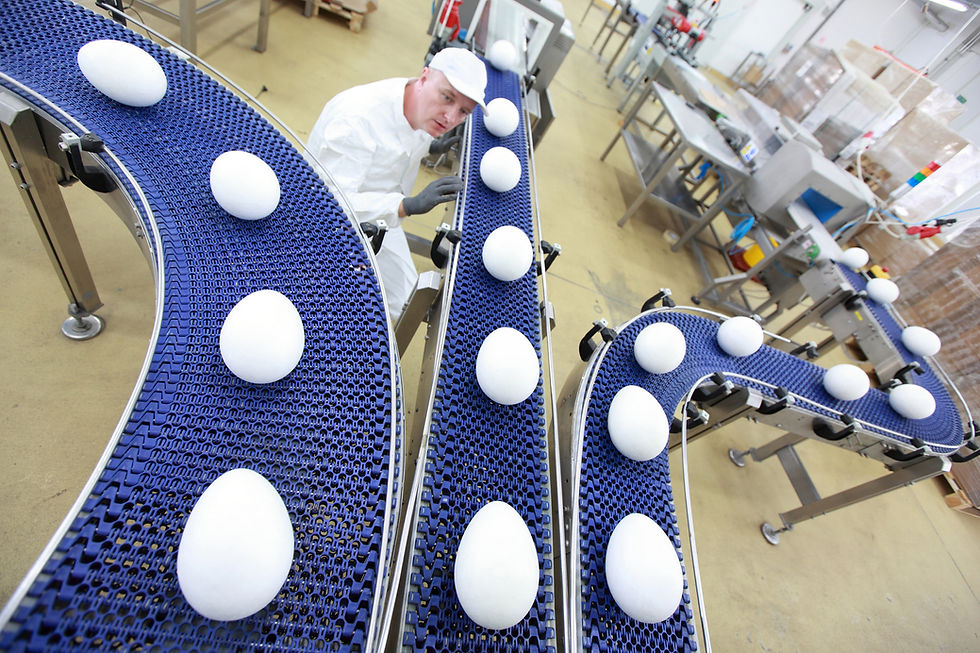
What is a food conveyor system?
At its core, a conveyor system is a mechanical way of moving products from one point to another in a continuous, controlled flow.
In food environments, these systems are specifically designed to handle ingredients and products safely, hygienically, and efficiently. They form the “backbone” of many processing lines, connecting each stage into a single, coordinated process. Without them, modern food production at scale would be almost impossible.
The basic idea: controlled movement
Most conveyor systems work on a simple principle: a moving surface carries products along a fixed path. That surface might be:
A belt moving over rollers
A series of rollers turning in sequence
A chain or modular system linking sections together
In many cases, a motor powers the system, driving pulleys or rollers that keep everything moving at a consistent speed. It’s a bit like a moving walkway at an airport—but designed for food, and built with far more precision.
What makes food conveyors different?
Not all conveyors are created equal. In food processing, there are additional considerations that shape how systems are designed and used.
Hygiene comes first - Food-grade conveyors are built to minimise contamination risks. They’re often made from stainless steel, with smooth surfaces and open designs that make cleaning easier. They’re also designed to reduce human contact with food products, which helps maintain safety and quality.
Gentle handling matters - Food products can be fragile—think fresh produce, baked goods, or prepared meals. Conveyors are designed to move items smoothly and consistently, helping to reduce damage and waste during processing.
They work in all kinds of environments - Food conveyors don’t just move products from A to B—they often operate within the process itself. For example:
Moving products through freezing or cooling systems
Carrying items through inspection or packaging lines
Transporting ingredients between different stages of production
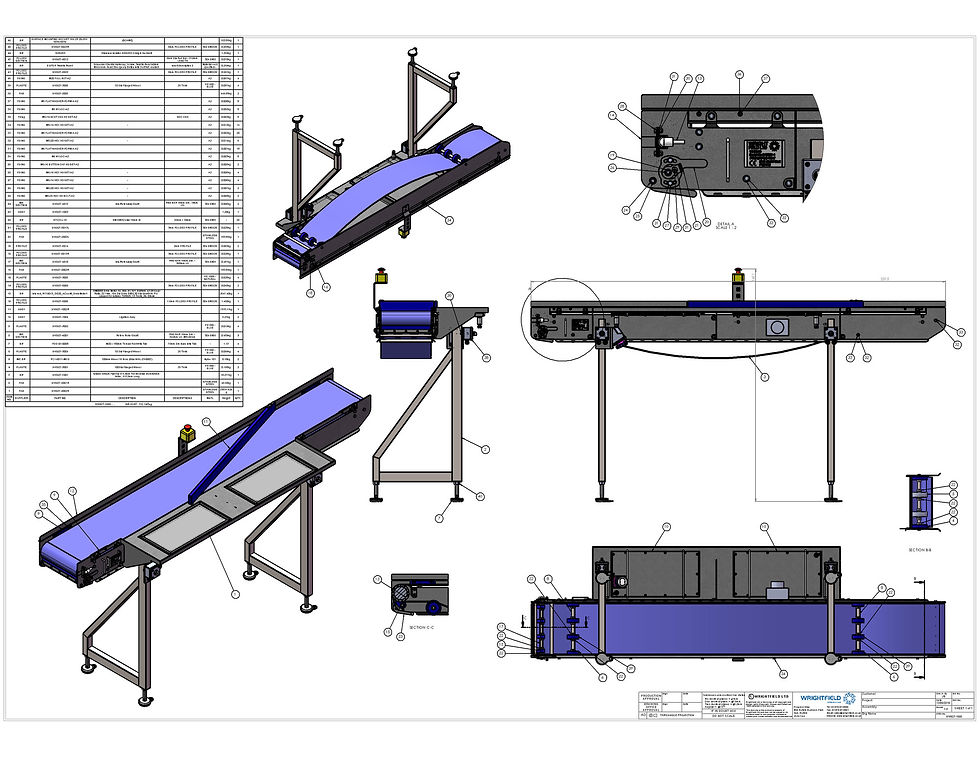
Different types of food conveyor systems
There isn’t just one type of conveyor. Different products and processes require different approaches. Some of the most common include:
Belt conveyors – versatile and widely used for both raw and packaged products
Pneumatic conveyors – use air to move powders like flour or sugar
Screw conveyors – ideal for controlled movement of granular materials
Bucket elevators – used for vertical transport in compact spaces
Each type is chosen based on what’s being moved, how far it needs to travel, and the conditions involved.
Why conveyors are so important in food production
It’s easy to think of conveyors as just “moving parts”—but their impact goes much deeper.
Consistency and flow - Conveyors create a steady, predictable flow of products through the line, which is essential for maintaining quality and efficiency.
Reduced manual handling - By automating movement, conveyors reduce the need for manual lifting and carrying—improving both safety and productivity.
Improved hygiene and control - Less manual contact and more controlled movement help maintain high food safety standards.
Scalability - Modern systems can be expanded, reconfigured, or integrated with automation as production needs change.

The role of speed and control
One detail that often gets overlooked is how much control goes into conveyor systems.
Speed isn’t fixed—it’s carefully set depending on the product and process.
For example:
Delicate foods may move slowly to prevent damage
Packaged goods can move faster to maximise throughput
Some systems allow variable speeds or stop-start control
This balance between speed and care is what allows conveyors to handle such a wide range of food products effectively.
A connected system, not just a machine
In modern facilities, conveyors are rarely standalone.
They’re part of a wider, integrated system—linking processing, inspection, packing, and storage into a single continuous flow. This is where they really show their value: not just moving products, but helping to coordinate the entire production process.
Bringing it all together
Food conveyor systems might seem simple on the surface, but they play a central role in how food is produced at scale. They:
Keep products moving smoothly
Support hygiene and safety standards
Reduce manual effort
Enable consistent, efficient production
And as automation continues to evolve, conveyors are becoming even more intelligent—working alongside sensors, robotics, and control systems to create smarter, more responsive production lines.


Comments